Pega interview preparation
Answer Pega interview questions like a Lead Architect.
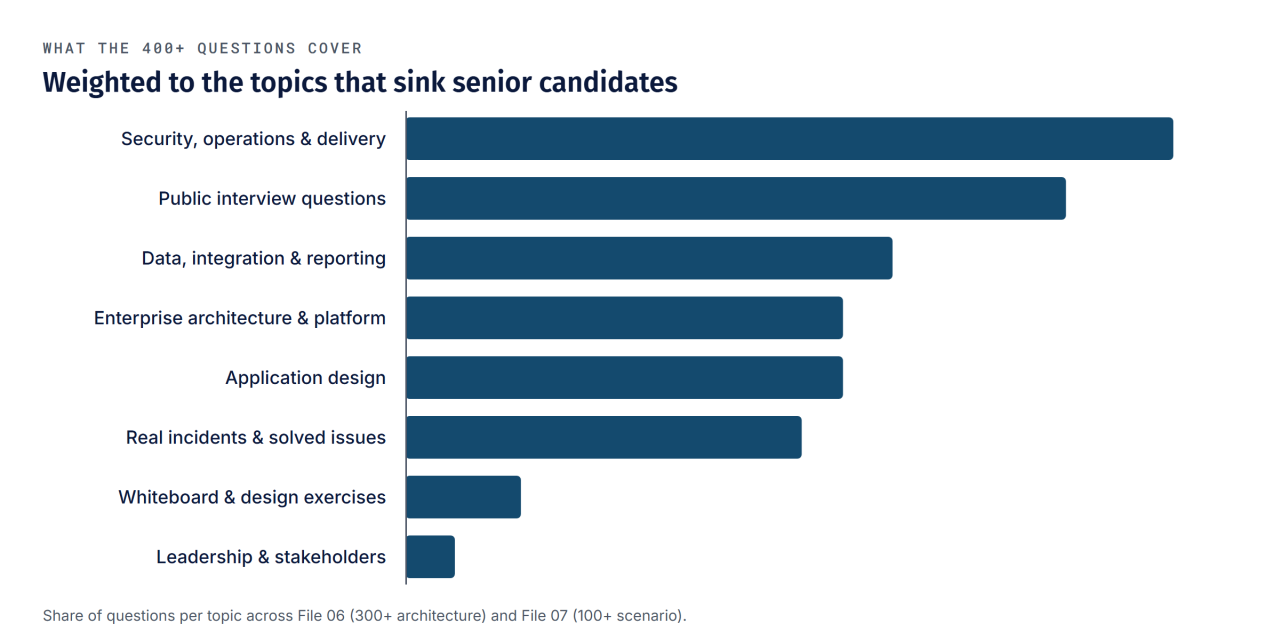
400+ senior architecture and scenario questions. For each one: the answer most developers give, what the interviewer is really testing, and the answer a lead architect gives, in a structure you can say in 60 seconds.
Minimum Requirement - Candidate must be at least Pega SSA certified
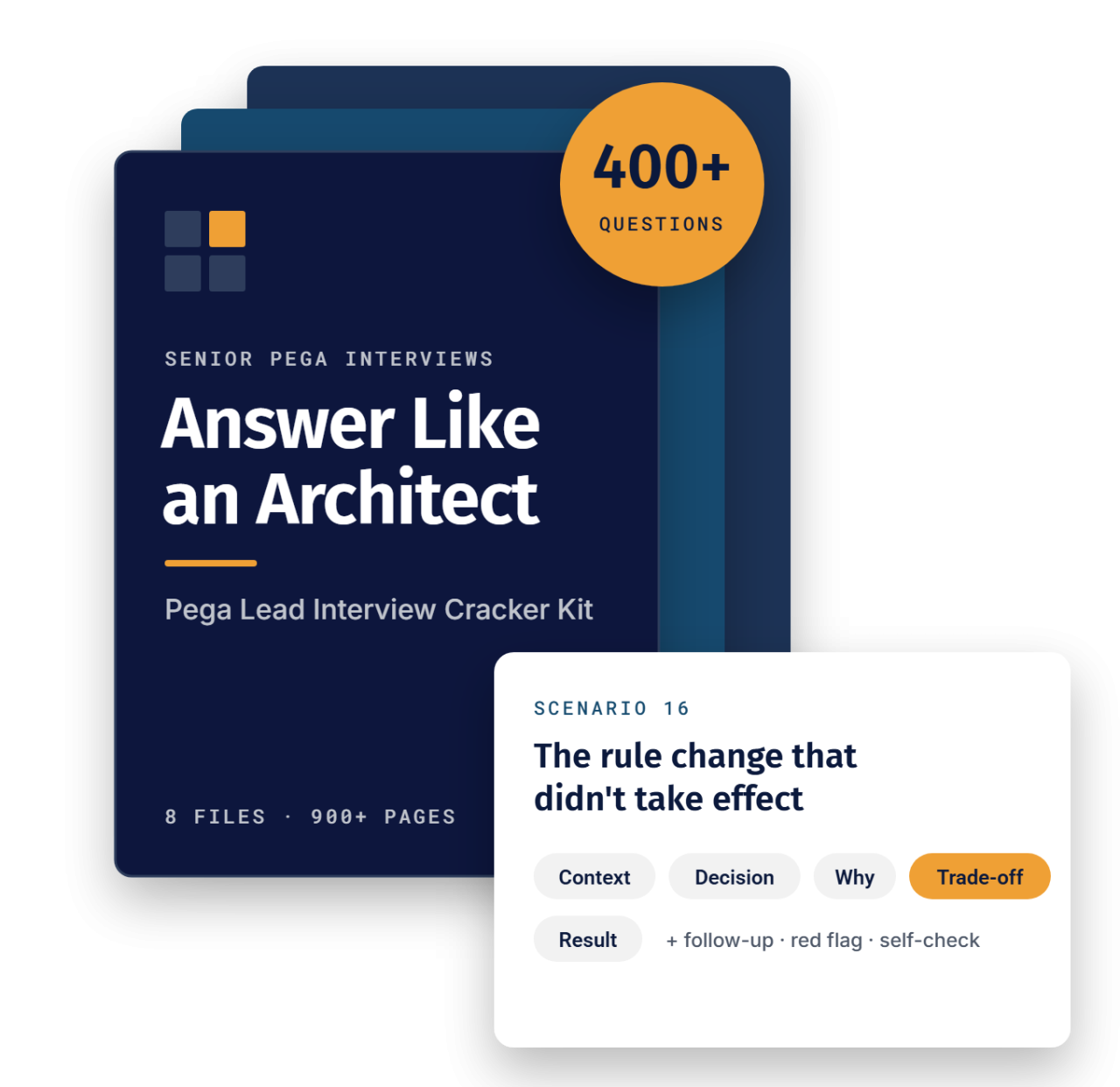
Pega Senior & Lead Interview Cracker
Answer Like an Architect:
Sound familiar?
You know Pega. Then they ask:
"Why not the other way?"
Experienced developers say the same thing in public forums:
the knowledge is there, but the answer comes out like a developer's, not an architect's.
I have 6 yrs experience, but in interviews I go blank on scenario-based questions.
Pega Senior Developer
I am answering design questions like a senior developer, not an architect.
LSA Candidate
I struggle to explain why this design over the others, to senior architects or clients.
Pega Team Lead
Self-study modules give theory, but don't teach real-world architectural trade-offs.
Pega Senior Developer
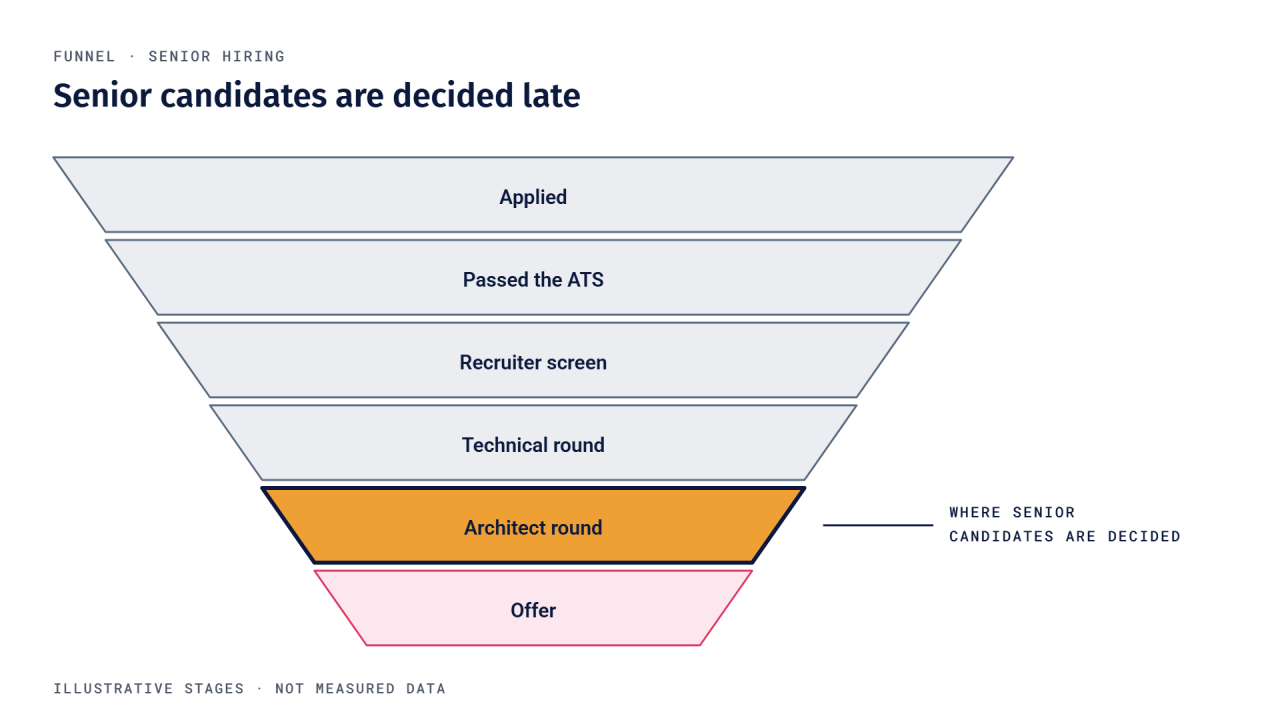
Why good developers get rejected
Senior candidates are decided in the architect round.
They stop testing facts.
They test whether you chose, or just used the only option you knew.
They challenge you on purpose.
"Why not a subprocess?" is where most answers fall apart.
They listen for the trade-off.
A correct answer with no cost named still sounds junior.
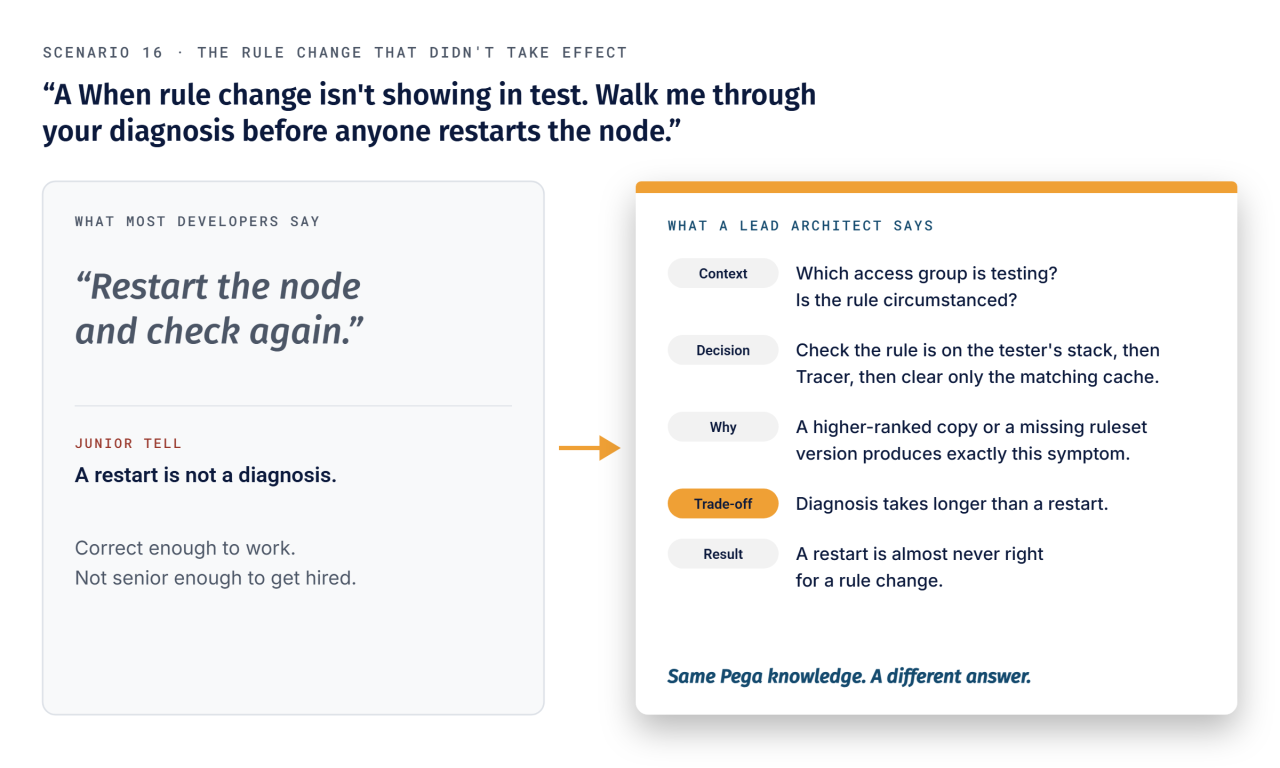
See the difference
Same knowledge. A different answer.
One real question from the kit. On the left, what most developers say. On the right, what gets the nod.
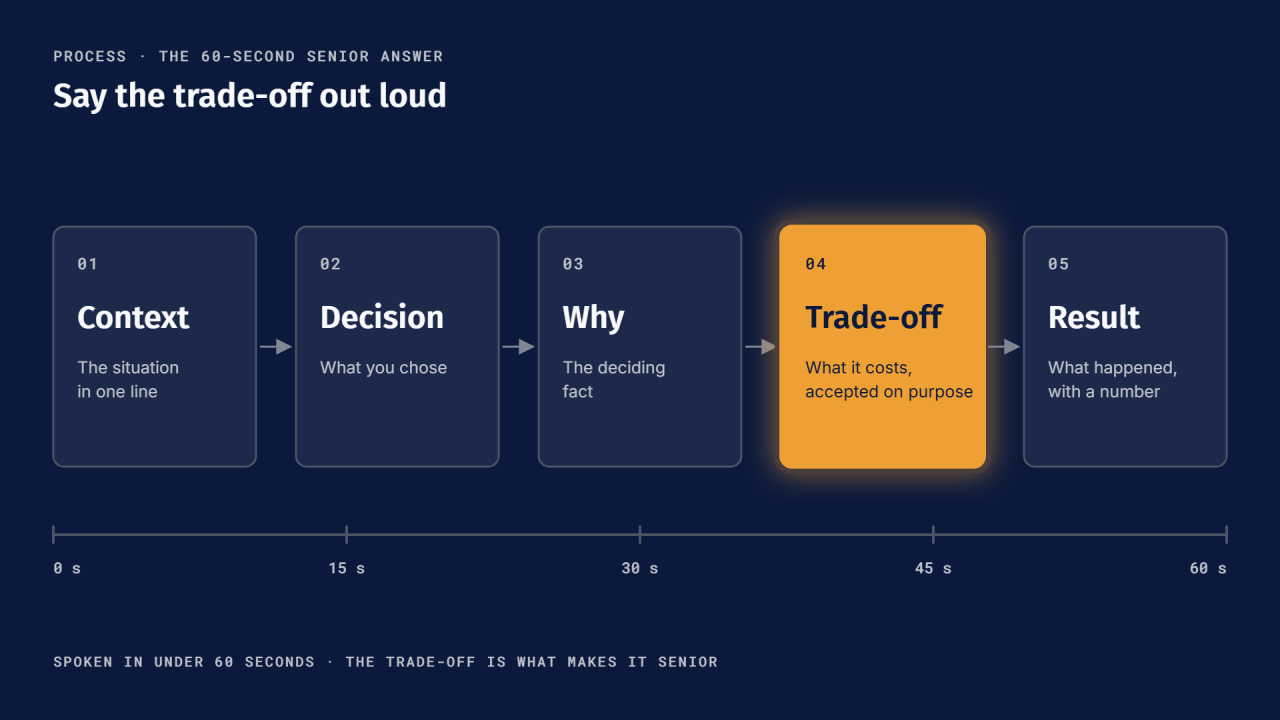
The method
The 60-Second Senior Answer
Five steps, in the same order, for every design question. The trade-off is the step that makes you sound senior.
400+
Total Questions
300+
Architect Level Questions
100+
Scenario Based Questions
60s
Question handling framework
Course Curriculum
How each question works
Six parts. Every page.
No guessing.
You don't just read the answer. You see why the obvious answer fails, what the interviewer is listening for, and how to check your own recording.
Platform facts are checked against Pega Official websites and documentation.
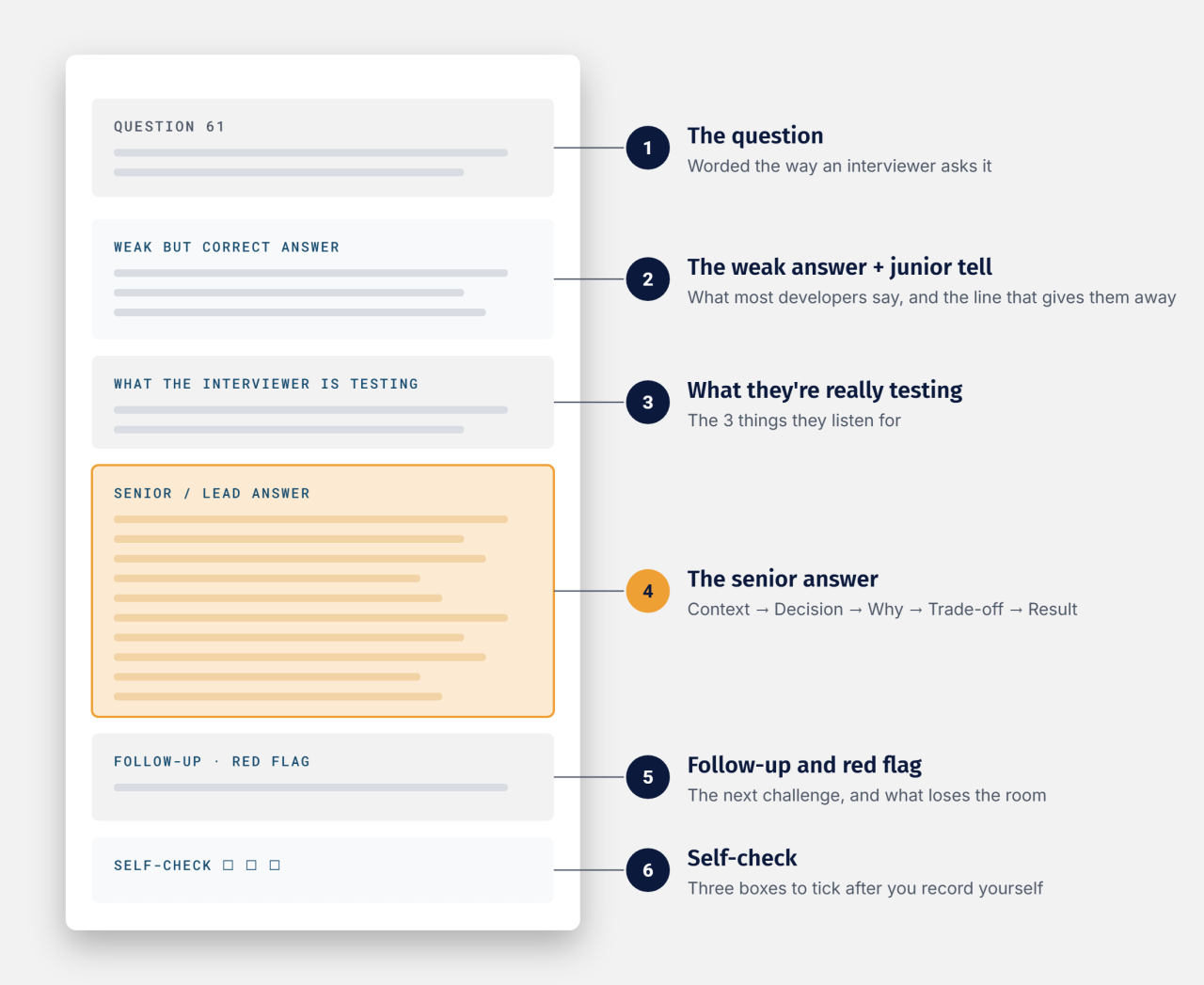
What loses the room
The 4 red flags interviewers listen for
Every question in the kit tags the red flag a weak answer shows, so you learn to hear it in your own voice.
RED FLAG 1
Click-path memory
You know which buttons to click, but not the pattern behind them.
"I'd just configure it in App Studio."
RED FLAG 2
Terms without the why
You can name the feature but not why it fits this requirement.
"We used a data page because it's best practice.
RED FLAG 3
Fix before diagnosis
You jump to a fix without saying how you'd investigate.
"Restart the node and check again."
RED FLAG 4
Thin integration logic
Said REST, but not how to handle auth, mapping, errors or retries.
"We called the REST service."